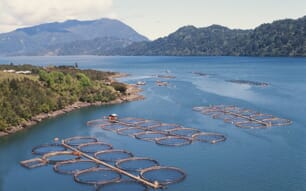
Asia and Latin America are the 2 major producing regions.
Tilapia is a fairly low-value species; however, there is a thriving international trade at the top end of the business, that is, fresh and frozen fillets for the tables of the USA and EU consumers.
Indeed, in the last 5 years or so, there has been an unprecedented development in the tilapia industry in terms of global production (double digit annual growth rate), international trade (26% increase per year in USA consumption), and industrialization of the farming industry (several integrated companies have emerged in recent years, each producing over 10,000 MT/year).
So, tilapia has emerged from obscurity to become the number one commodity aquaculture species in the world.
It has taken the USA market by storm, from 25,000 MT consumed in 1995 to almost 300,000 MT this year (USDA Statistics).
Of the 70 species of tilapia, nine are used in farming and, of these, the Nile tilapia (Oreochromis niloticus) is the main cultured species and responsible for the significant increase in global tilapia aquaculture production. The major producing countries are China, Egypt, Indonesia, Philippines, Mexico, Thailand, Taiwan and Brazil.
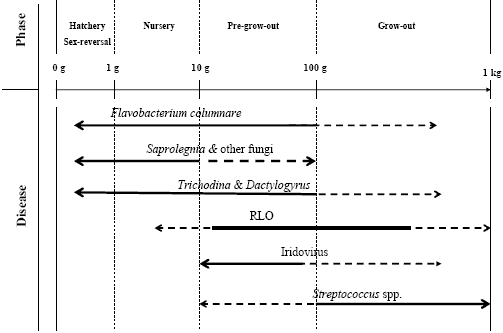
Major diseases affecting tilapia during the farming cycle
 Intensified tilapia production is increasing due to the high demand on both domestic and international markets. |
Tilapia farming ranges from rural subsistence farming to large-scale commercial operations depending on the intensity of management employed. Earthen ponds are the most common culture system worldwide.
Concrete tanks and raceways are commonly used in countries where temperature is seasonal and mainly for intensive and super-intensive culture of tilapia. Cage culture is mainly practiced in lakes, reservoirs, rivers and estuaries.
Tilapia are farmed in different culture systems (extensive, semi-intensive, intensive, monoculture, polyculture, monosex culture, mixed sex culture) depending on the farmer’s resources, site characteristics, environmental conditions, socio-economic factors, technological know-how and market demand.
 A diseased fish showing exophthalmia and opaque eye. World production of tilapia has increased rapidly and unfortunately so has the incidence of disease. |
All the indications are that tilapia is no longer a disease-resistant species. There are a number of bacterial and viral diseases and some of them are devastating.
The American Tilapia Association identifies streptococcal disease, killing big fish from 150 – 300 g onward, as the most important pathogen affecting the tilapia culture industry. In April 2005, a rickettsia-like organism (RLO) outbreak caused severe mortality in a farm in Central America, valued at $2.5 million (Intrafish.com).
From the different pathogens found, Streptococcus is the most common, widespread and pathogenic, while RLO is an emerging pathogen. Flavobacterium columnare infection is a common pathogen in early stages. Iridovirus is the only documented viral disease in tilapia.
Further Information
Columnaria In Tilapia
Streptococcus In Tilapia
April 2006