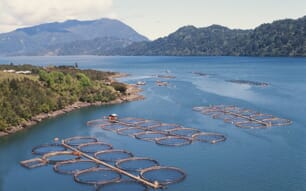
In 2011, 51 million salmon were lost in Norwegian salmon farming which is around 20% of the total number of salmon transferred to sea pens (Gullestad, et al., 2011). 76% of the total loss was due to mortality caused by disease, injury, or stress caused by handling the fish (Norwegian Directorate of Fisheries). A major part of the losses occur shortly after seawater transfer.
Producing a larger and more robust smolt may improve survival and growth after seawater transfer. As well as being a potential problem for wild salmon stocks, lice also cause stress and reduced growth in farmed salmon due to frequent delousing. Reducing the time spent in open sea pens may thus also reduce the problems with salmon lice.
Postsmolts up to 1 kg can be produced in land-based plants, using flow-through or recirculating aquaculture systems (RAS). However, the optimal strategy for large postsmolts in RAS, regarding salinity and timing of seawater transfer is not known. Seawater RAS may have higher operating costs compared to freshwater/brackish water RAS, due to the lower efficiency of CO2 (Moran, 2010) and ammonia removal in seawater. Thus, it may be hypothesized that producing postsmolts in lower salinity water could be a cost-efficient solution, if fish performance and health is not compromised.
Exercise through increased water velocity improve growth rate and robustness of earlier life stages, i.e. parr (Castro, et al., 2011). In the present study we therefore tested the combined effects of salinity and exercise on Atlantic salmon postsmolts in RAS.
Methods
Atlantic salmon smolts (n=7200, 68±1 g/ind., SD) were stocked in duplicate 3.2m3 tanks per treatment in three different salinities (12, 22 and 32 ‰) in Nofima Centre for Recirculation in Aquaculture (NCRA)(Terjesen, et al., 2012).
The three RAS systems received a similar relative feed loading of full capacity, and a recirculation degree of 98-99%. The temperature was kept at 11.8±0.9ºC in all three RAS. At each salinity, the fish were subjected to either a high water velocity in the tank (1.2 bodylengths per second) or a low water velocity (0.3 BL/s). These water velocities were kept constant throughout the trial. At 250 and 450 g/ind., the fish were transferred from brackish (12 and 22‰) to seawater RAS (32‰), and in these tanks PIT-tagged fish from all groups were mixed.
Seawater tests with exposure to 34‰ for 72h were done when fish were transferred to full-strength seawater, and plasma Cl and gill Na+K+-ATPase were measured to check the osmo- and
ionoregulatory status.
Water quality (CO2, TAN, NO2-N, NO3-N, alkalinity, TSS, metals) and removal efficiencies of CO2 and TAN were measured. Growth rate, feed conversion ratio, and survival of salmon subjected to different salinity and exercise was measured for the periods of 68-260 g, 260-450 g and 450-1000 g/ind.
The fish were bulk-weighed, PIT-tags read, and blood, skin, liver, heart, spleen, gut and vertebrae collected at bodyweights of ~250, 450 and 1000 g/ind., for examination of physiology and general health of the fish. Sexual maturation (gonadsomatic index, GSI), hepatosomatic index (HSI) and cardiomyosomatic index (CSI) as well as ionoregulatory status and health parameters were also measured, and the welfare of the fish evaluated using a scoring system for skin color, wounds and fin damage (Hoyle, et al., 2007).
Results and discussion
Preliminary results from this study show that both salinity and exercise has profound effects on survival, feed intake, growth, and physiology in postsmolt Atlantic salmon reared in RAS from 70 to around 450 g. Furthermore, RAS water quality was affected in that CO2 removal efficiency was higher at 12 ‰, and water NO2-N levels more stable, compared to at 32 ‰.
The mortality increased with salinity and was 0.3, 1.9 and 2.4% for salmon grown from 68 to 260 g (period 1), at 12, 22 and 32 ‰ respectively. The effect of salinity on mortality was more evident in the second period from 260 to 450 g/ind.
The fish kept in 32 ‰ appeared more sensitive to handling stress associated with weighing and sampling compared to fish at lower salinities. This group showed had a higher mortality rate during period 2 (10%) compared to fish at lower salinities (0.7 % in 12 and 22 ‰). The mortality occurred mainly during the first two weeks after handling the fish.
Exercise increased growth rate in all salinity groups at the 250 g/ind. sampling point. In particular, salmon exposed to 12 ‰ grew better than the salmon at 22 and 32 ‰, and the positive effect of exercise on growth was more evident in the 12 ‰ group. In general, exercising the fish increased the relative heart (cardiosomatic index, CSI) and the liver size. The heart size decreased with increasing salinity, but this effect was most prominent at lower bodyweight. The gonadosomatic index (GSI) and external appearance of the fish did not indicate any maturation at the 450 g/ind. sampling point.
In conclusion, the results from this study indicate that a salinity of 12 ‰ and a water velocity of 1.2 bodylengths per second have a positive effect on salmon growth rate in RAS. Using brackish water can be a cost-efficient strategy provided that the fish can handle the transfer to seawater.
October 2013